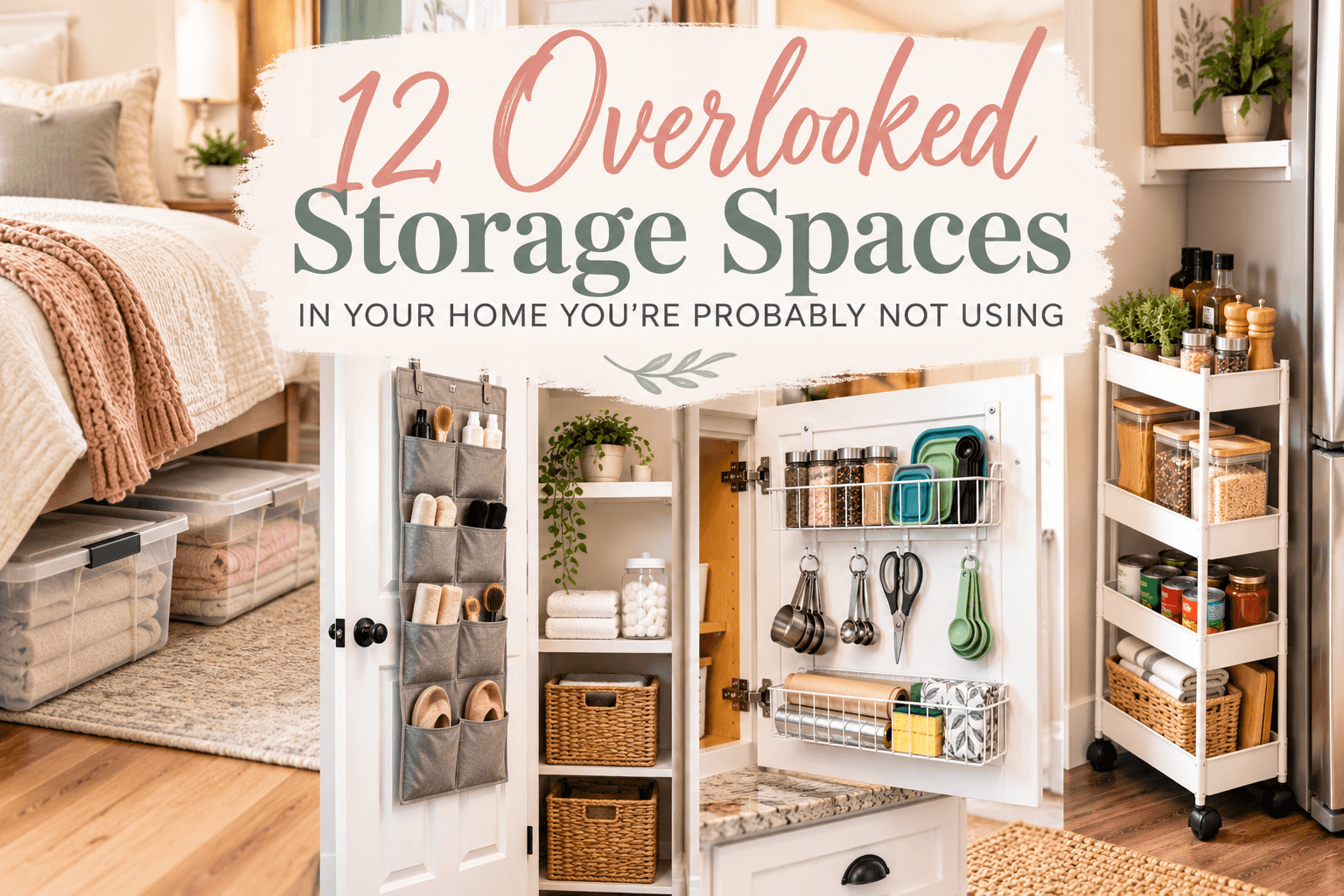
Finding overlooked storage spaces in your home starts by looking vertically at unused areas like the backs of doors, the inside of cabinet doors, and the empty wall space above toilets or furniture. You can easily maximize these hidden spots by using low-profile under-bed bins, slim rolling carts for narrow furniture gaps, and under-shelf baskets that take advantage of wasted vertical clearance. Utilizing these existing spaces allows you to double your home’s storage capacity without needing to renovate or buy expensive organizers.
When your home starts feeling short on storage, it’s easy to assume you need more cabinets, more shelving, or a bigger house. But some of the best overlooked storage spaces are already hiding around your home—you may just not be using them yet.
There are storage opportunities hiding all over the average home—in places we tend to overlook because they weren’t necessarily designed as storage areas.
The goal isn’t to fill every empty inch of your house with stuff. It’s to make better use of the space you already have so the things you actually need are easier to store, find, and put away.
Before buying another storage cabinet or trying to squeeze one more piece of furniture into a room, take a look at these often-overlooked spaces around your home.
Affiliate Disclosure: This post contains affiliate links. If you make a purchase through one of these links, I may earn a commission at no additional cost to you. As an Amazon Associate I earn from qualifying purchases.
1. The Backs of Doors
The back of a door gives you usable vertical space without taking up any additional floor space.
Over-the-door organizers work especially well in bedrooms, bathrooms, pantries, laundry areas, and closets. Depending on where you use one, it can hold shoes, cleaning supplies, toiletries, accessories, pantry items, or other smaller things that tend to pile up.
You don’t necessarily need a large organizer, either. A few hooks on the back of a door can create a convenient place for robes, handbags, hats, reusable shopping bags, or frequently used items.
Just be careful not to overload the door. The goal is useful storage, not creating another cluttered surface.
2. The Space Under Your Bed
Under the bed is one of the most useful overlooked storage spaces, especially in a small bedroom.
It’s a good place for things you need but don’t use every day, such as extra bedding, seasonal clothing, shoes, handbags, or out-of-season items.
Low-profile storage bins can keep everything contained and protected while still making it easy to pull things out when you need them.
If your bed sits too low for storage containers, bed risers may create additional clearance. Just measure the available height before buying anything so you know your containers will actually fit.
And try to avoid turning the space under the bed into a place where random things disappear. Containers and simple categories make the space much easier to maintain.
3. The Inside of Cabinet Doors
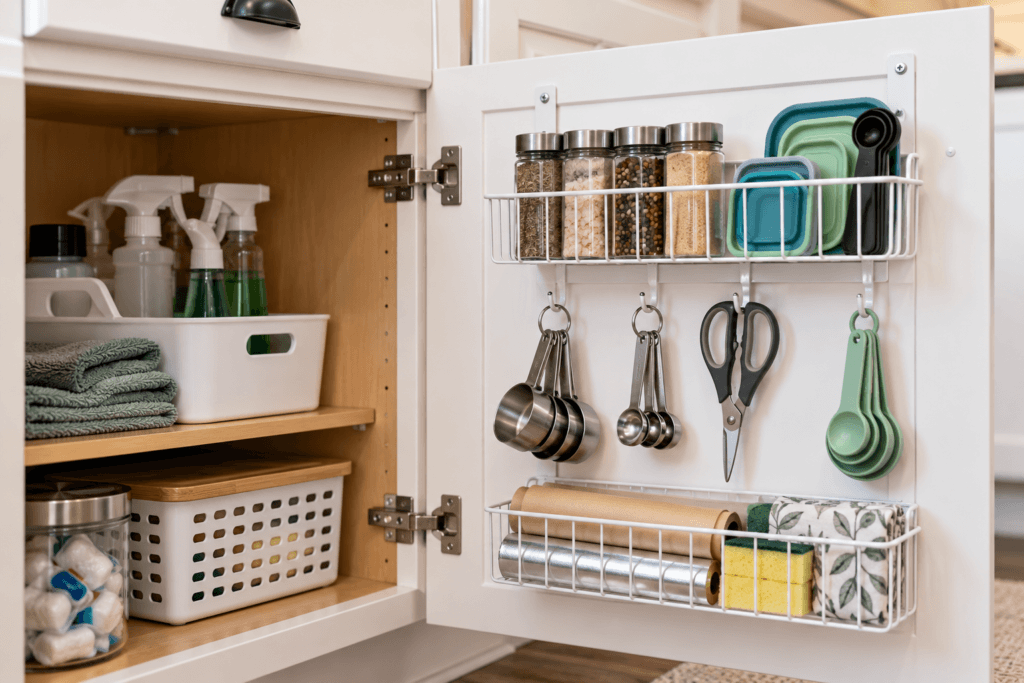
Open your kitchen or bathroom cabinets and look at the inside of the doors. That blank surface may be useful storage space.
Small adhesive hooks, narrow racks, or door-mounted organizers can hold lightweight items that would otherwise take up room inside the cabinet.
In the kitchen, this might include measuring spoons, pot lids, cleaning gloves, or small tools. In the bathroom, you could use the space for hair accessories, small grooming tools, or frequently used products.
Before attaching anything, make sure the organizer won’t hit shelves or other items when you close the cabinet door.
4. The Space Above Kitchen Cabinets
If your cabinets don’t extend all the way to the ceiling, the area above them can provide extra storage for things you don’t need very often.
Large serving pieces, seasonal kitchen items, specialty appliances, or extra supplies can sometimes work well here.
Matching baskets or bins can keep the area from looking cluttered while protecting smaller items from dust.
Because this space is harder to reach, save it for things you only use occasionally rather than anything you need every day.
5. The Area Under Your Kitchen Sink
The cabinet under the kitchen sink is often awkward because plumbing takes up so much of the available space. That doesn’t mean the rest of the cabinet has to go unused.
Instead of trying to force one large organizer around the pipes, use smaller storage pieces that fit the available areas.
A narrow bin can hold dishwasher supplies. A small basket can contain sponges and cleaning cloths. A tension rod may work for hanging certain spray bottles, depending on the cabinet setup.
Keeping similar items together also makes it much easier to see what you already have before buying more.
If this is one of your problem areas, you may also find some useful ideas in our guide to organizing a small kitchen without spending a fortune.
6. The Upper Shelves of Closets
Closet shelves often have more usable space than we realize.
You might have a shelf with a few things sitting on the bottom while several inches—or even a foot—of vertical space above them goes unused.
Shelf risers, stackable bins, or sturdy baskets can help take advantage of that height.
Upper shelves are especially useful for seasonal items, extra linens, handbags, keepsakes, or things you want accessible but don’t need every day.
Labeling containers can also save you from pulling down three different bins just to find one item.
7. The Floor of Your Closets
Closet floors can quickly become a pile of shoes, bags, boxes, and whatever else gets pushed inside when you’re trying to clean up quickly.
But that floor space can be much more useful with a little structure.
A small shoe rack, stackable drawers, baskets, or low bins can turn the bottom of the closet into organized storage while still leaving your hanging clothes accessible.
Before adding anything, clear the closet floor completely and decide what actually belongs there. Otherwise, you may just be organizing things you don’t need.
If clutter has spread beyond the closet, our room-by-room decluttering guide can help you decide what to tackle first.
8. The Space Above the Toilet
Bathrooms are often short on storage, particularly when there isn’t much cabinet space.
The wall above the toilet is one area that frequently goes unused.
A small wall cabinet, floating shelves, or an over-the-toilet shelving unit can provide storage for extra toilet paper, towels, toiletries, and other bathroom necessities.
If you prefer a less cluttered appearance, use baskets or containers to keep smaller items together rather than lining up lots of individual products on open shelves.
9. Narrow Gaps Between Furniture and Walls
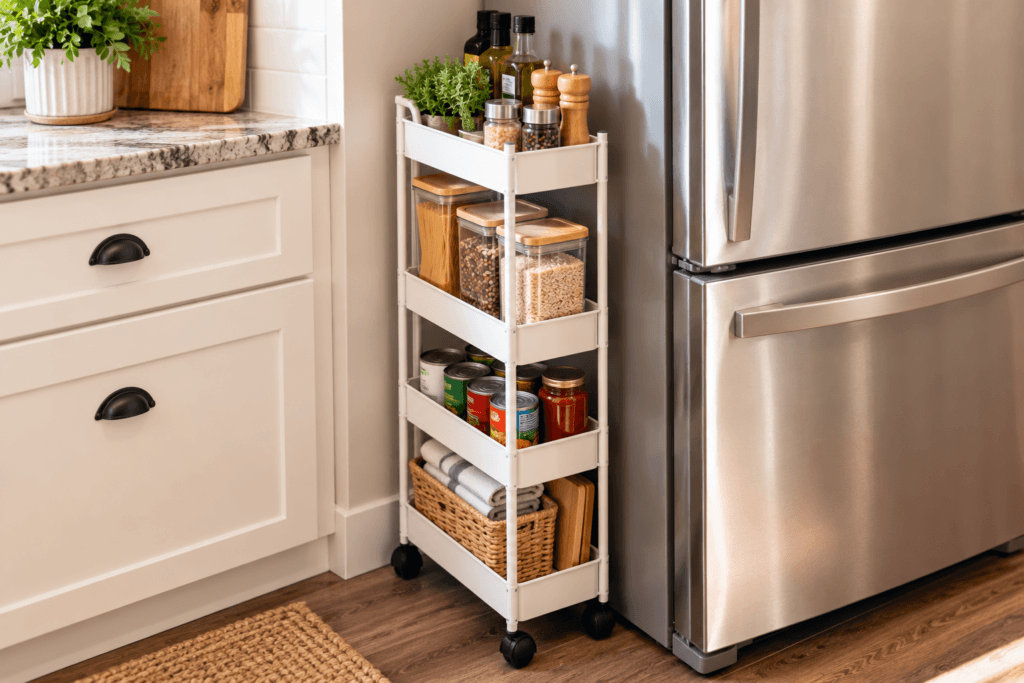
That skinny space beside the refrigerator, washer, dresser, or other furniture may be more useful than it looks.
Slim rolling carts are designed specifically for narrow spaces and can sometimes add several levels of storage where a traditional cabinet would never fit.
Depending on the room, a narrow cart could hold pantry items, laundry supplies, craft materials, toiletries, or cleaning products.
Measure carefully before purchasing one. Even an inch can make the difference between a cart that slides neatly into place and one that doesn’t fit at all.
10. The Walls Above Furniture
Storage doesn’t always have to sit on the floor.
Look at the unused wall space above desks, dressers, toilets, laundry machines, or other furniture.
Floating shelves or wall-mounted storage can make use of that vertical space without adding another bulky piece of furniture.
This works particularly well in small rooms where floor space is limited.
Keep frequently used items within comfortable reach and reserve higher shelves for lighter or less frequently used belongings.
11. The Space Under Shelves
We usually think about what goes on a shelf, but the area directly underneath it can sometimes be useful too.
Under-shelf baskets can create another small layer of storage inside kitchen cabinets, pantries, closets, or office shelving.
They work especially well when there’s a large gap between shelves and you’re stacking things just to use the available height.
Depending on the location, they can hold food-storage lids, wraps, small towels, office supplies, accessories, or other lightweight items.
Before buying one, measure both the shelf thickness and the open space underneath it.
12. The Space Behind Furniture
You probably don’t want to pull every piece of furniture away from the wall just to create storage, but some rooms naturally have unused space behind larger pieces.
A narrow console behind a sofa, for example, can provide a surface and storage without requiring much additional room.
A shallow basket behind or beside a piece of furniture might also work for items such as extra blankets, exercise equipment, or things you use occasionally.
The important part is keeping the storage intentional and accessible. If you completely forget what you put there, it probably isn’t helping your home function any better.
People Frequently Ask
How do I find hidden storage in a small house?
Look for unused vertical and structural gaps that are normally ignored. Prime examples include the backs of bedroom doors, the inside surfaces of kitchen cabinets, the wall space directly above toilets, and the blank areas above your kitchen cupboards.
What can I do if my bed is too low for under-bed storage?
You can easily create extra vertical clearance underneath a low bed frame by installing heavy-duty bed risers. This raises the bed by 3 to 6 inches, instantly giving you a clean, functional zone for low-profile storage bins.
How do you utilize deep or awkward storage spaces?
Use long, lightweight bins or sliding baskets that can function like pull-out drawers. This allows you to pull the contents forward effortlessly so items stored all the way in the back do not get lost or forgotten.
Put Your Overlooked Storage Spaces to Work
Making better use of overlooked storage spaces doesn’t always mean adding more furniture or buying a house full of organizing products.
Sometimes the best place to start is simply looking at your home differently.
Check the doors. Look under the furniture. Look up at the walls. Open your closets and cabinets and notice where usable space is being wasted.
You may discover that you have more storage than you thought.
And you don’t have to tackle all 12 areas at once. Choose one space that’s causing you problems, make it work a little better, and then move on when you’re ready.
🎁Free Resource: Grab the Simple Home Organizing Checklist
Looking for a realistic way to find extra space in your home? Download my free 6-page Simple Home Organizing Checklist to clear the clutter and unlock your home’s hidden storage potential at your own pace.
What’s Included Inside:
- Step-by-Step Checklists: Room-by-room breakdowns for a clutter-free home.
- The Weekly Reset Guide: Easy habits to stop messes before they start.
- Actionable Planners: Space to map out exactly what storage zone to tackle next.