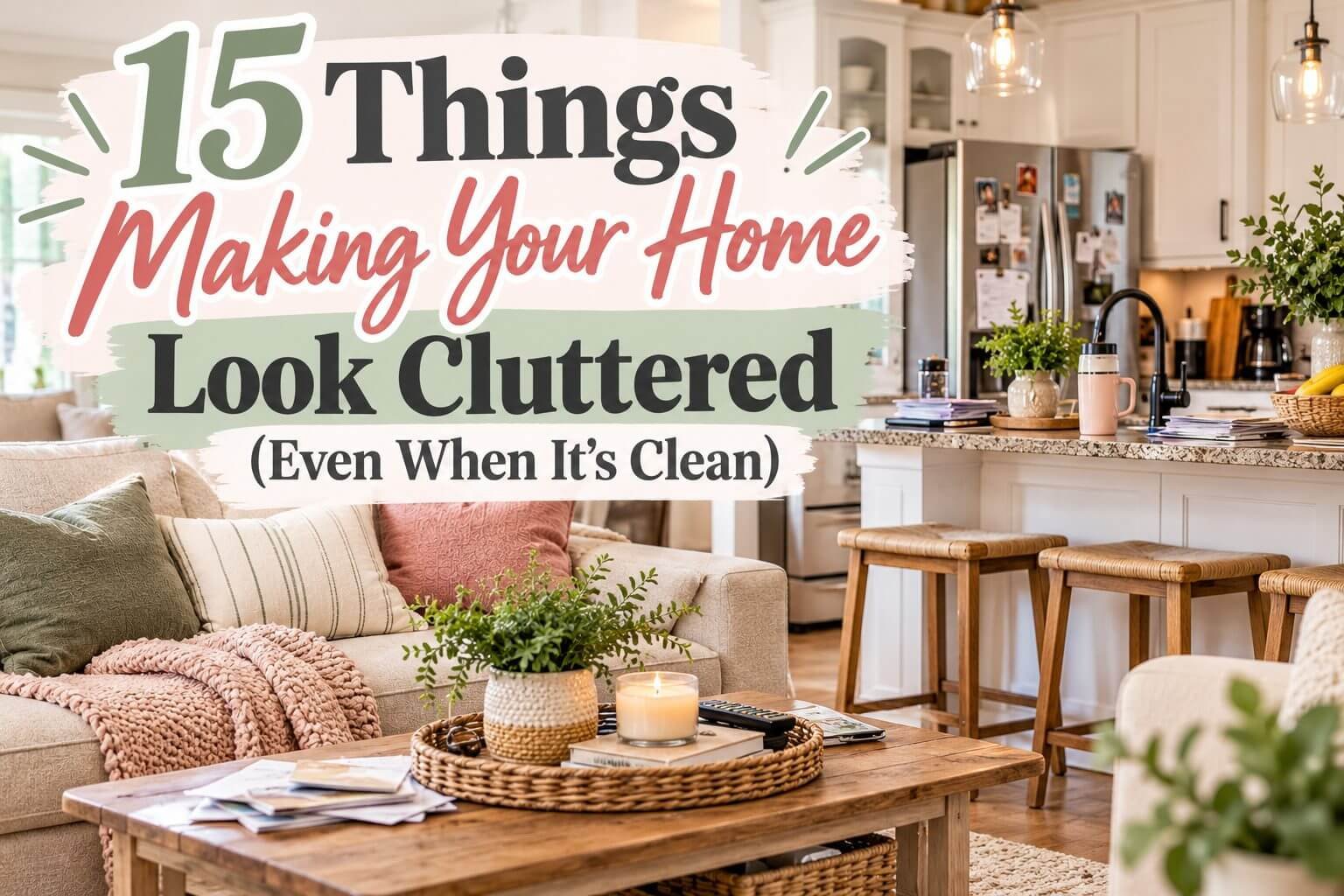
The primary things making your home look cluttered even when it is clean are elements of visual clutter like tangled electronic cords, overcrowded flat countertops, and overloaded refrigerator doors or open shelves. These everyday items create severe visual noise by forcing your eyes to look at too many competing shapes, bright product labels, and patterns at once. You can instantly make an otherwise clean house feel significantly calmer by grouping loose items onto decorative trays, hiding busy packaging inside simple baskets, and utilizing vertical storage space.
You can clean the floors, wipe down the counters, put away the laundry, and still look around your home and wonder why it feels cluttered.
Sometimes the problem isn’t that your home is dirty or even that you own too much. It’s simply that certain everyday items create a lot of visual clutter.
Visual clutter happens when there are too many things competing for your attention at once. A crowded countertop, a collection of bottles around the bathroom sink, tangled cords, or an overflowing refrigerator door can make an otherwise clean room feel busy and disorganized.
The good news is that you don’t need to empty your house or hide everything you own. A few small changes can make your home feel noticeably calmer.
Here are 15 things making your home look cluttered, even when it’s clean.
Affiliate Disclosure: This post contains affiliate links. If you make a purchase through one of these links, I may earn a commission at no additional cost to you. As an Amazon Associate I earn from qualifying purchases.
Too Much Stuff on the Kitchen Counters
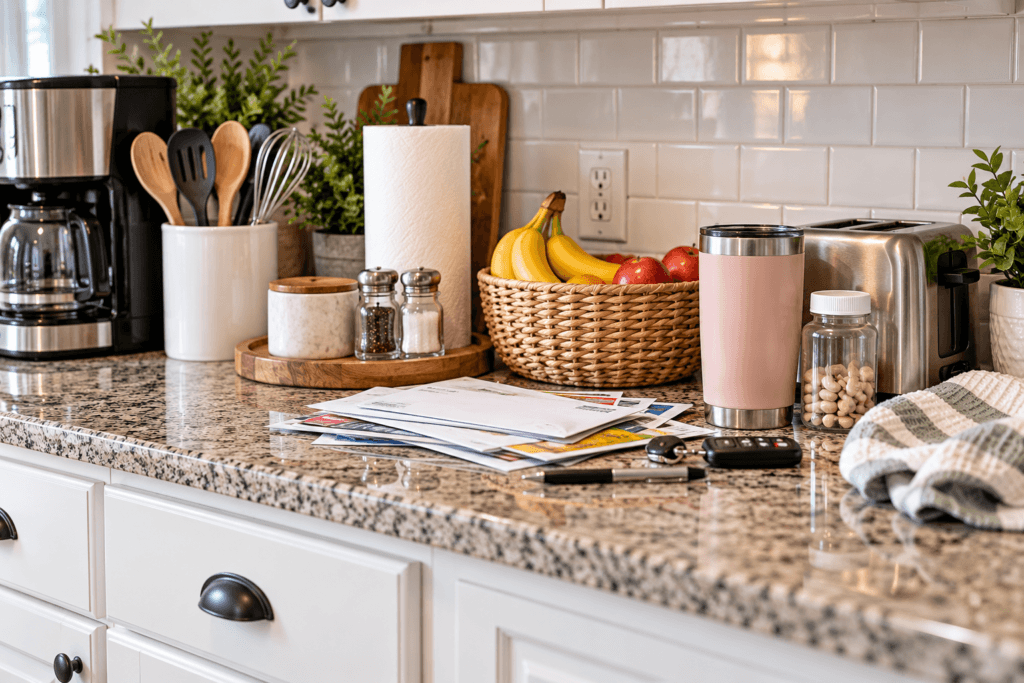
Kitchen counters naturally collect things. The coffee maker, toaster, mail, vitamins, fruit bowl, cooking utensils, paper towels, and whatever someone just brought into the house can quickly fill every available surface.
You don’t need completely empty countertops. Instead, decide which things genuinely need to stay out because you use them regularly.
Try grouping smaller items together on a tray or storing appliances you rarely use inside a cabinet or pantry. Leaving some open counter space gives your eyes a place to rest and can make the entire kitchen feel more organized.
If counter space is especially limited, these ideas for organizing a small kitchen without spending a fortune can help you make better use of the space you have.
Visible Cords and Chargers
Phone chargers, television cords, extension cords, computer cables, and appliance cords may be necessary, but a tangled collection of them can make a room look messy.
Look for cords that can be routed behind furniture or secured along the back of a desk or entertainment center.
Cable clips, cord covers, and simple cord organizers can also keep several cables together instead of letting them spread across the floor or furniture.
You don’t have to make every cord disappear. Just containing them can make a surprisingly big visual difference.
An Overloaded Refrigerator Door
The refrigerator often becomes the household bulletin board.
Magnets, appointment reminders, school papers, photographs, coupons, calendars, takeout menus, and artwork can gradually cover nearly every inch.
Keep the things that are important to you, but periodically remove anything outdated or unnecessary.
You might designate one section of the refrigerator for current papers and rotate photographs or artwork instead of displaying everything at once.
Too Many Small Decorations
Small decorative items can add personality to a room, but lots of little objects spread across every surface can make the space feel crowded.
Instead of displaying everything at the same time, choose a few favorites.
Grouping several related items together can also look more intentional than scattering them throughout the room.
You don’t have to get rid of the things you love. Store some and rotate them occasionally. Your favorite pieces may actually stand out more when they aren’t competing with dozens of other objects.
Paper Piles
Mail, receipts, forms, coupons, school papers, instruction manuals, and other paperwork have a way of appearing everywhere.
Even a small stack can quickly turn into several stacks around the house.
Choose one place for incoming papers rather than allowing them to land on the kitchen counter, dining table, dresser, and coffee table.
A simple mail organizer, basket, or file folder can contain papers until you have time to sort them.
Then periodically recycle, file, or deal with what has accumulated.
Too Many Things Around the Bathroom Sink
Bathrooms are especially prone to visual clutter because so many things are used every day.
Toothbrushes, toothpaste, skincare products, makeup, hair products, medications, and grooming tools can quickly cover a small vanity.
Keep the things you use most often accessible, but consider moving less frequently used products into drawers, cabinets, or baskets.
A small tray can also make several everyday products look like one organized grouping rather than a collection of unrelated bottles.
Open Shelves That Are Too Full
Open shelving can look beautiful, but it becomes visually overwhelming when every inch is filled.
Try leaving a little empty space between groups of items.
Mix practical storage with a few decorative pieces instead of treating the shelves as a place to fit as much as possible.
Baskets and matching containers can also help hide smaller items that would otherwise make the shelves look busy.
An Entryway With No Landing Spot
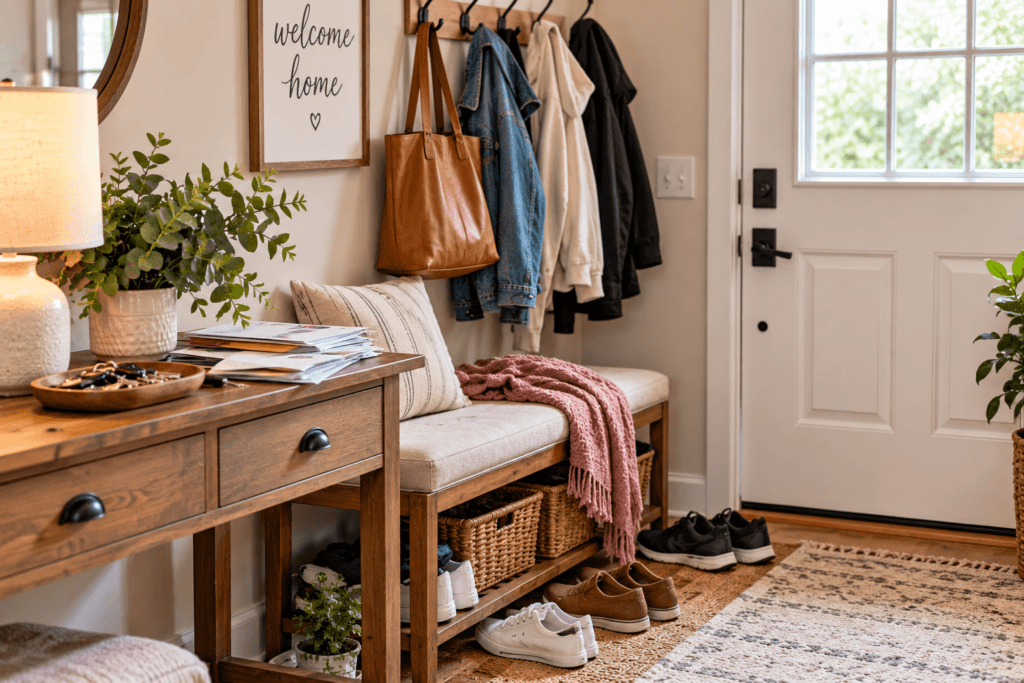
Shoes by the door. Keys on the table. Bags on the floor. Jackets hanging over chairs.
Entryways collect clutter because they’re where everything gets dropped when people come home.
Create a designated place for the things that regularly enter the house.
That might mean hooks for bags and jackets, a basket for shoes, and a small tray for keys.
Even a very small entryway can work better when everyday items have an obvious place to go.
Too Many Products With Busy Packaging
Sometimes the clutter isn’t the number of things you own—it’s all the labels, colors, and packaging.
Laundry rooms, bathrooms, pantries, and cleaning cabinets can look especially busy because nearly every product has bright packaging.
You certainly don’t need to transfer everything into matching containers. That’s extra work and expense that isn’t necessary.
Instead, try grouping similar products inside baskets or bins. You still keep the original packaging and information, but the room looks calmer from the outside.
Furniture Covered With Everyday Items
Furniture covered with everyday items is one of those things making your home look cluttered without you necessarily noticing it.
Furniture surfaces easily become temporary storage.
Look at the surfaces in the room and ask what tends to land there repeatedly.
Rather than constantly moving those things, give them a permanent home nearby.
If shoes always end up beside a chair, perhaps a basket belongs there. If mail always lands on one end of the counter, that’s probably where your mail organizer should go.
Good organization often means working with your habits instead of fighting them.
Too Many Things on the Floor
Laundry baskets, shoes, bags, boxes, pet supplies, toys, and other items sitting on the floor can make a room feel crowded even when everything else is relatively organized.
Whenever possible, use vertical storage instead.
Hooks, shelves, wall-mounted organizers, and over-the-door storage can move frequently used items off the floor without taking away accessibility.
You may also have storage areas you’re not taking advantage of. These 12 overlooked storage spaces around your home can help you find additional room without adding more furniture.
Crowded Nightstands
Nightstands are small, which means they don’t take much clutter to look overloaded.
A lamp, phone charger, water bottle, book, medications, glasses, tissues, and other nighttime necessities can quickly fill the entire surface.
Keep your most-used items on top and move the rest into a drawer or small bedside basket if you have one.
If your nightstand doesn’t have storage, even a small decorative box can contain things like lip balm, medications, or charging accessories.
Mismatched Storage Everywhere
You don’t need a house full of identical baskets and containers. In fact, replacing perfectly functional storage just because it doesn’t match can become expensive very quickly.
But having lots of different containers sitting together in one visible area can create visual clutter.
Before buying anything new, see whether you can rearrange the containers you already own.
Put similar ones together, move mismatched storage behind closed doors, or use neutral baskets in the most visible areas.
The goal isn’t perfection. It’s simply reducing some of the visual noise.
Things You Haven’t Decided What to Do With
Some clutter exists because an item doesn’t have a home. Other clutter exists because you haven’t decided whether you even want the item anymore.
Those undecided things tend to move from room to room.
Instead of reorganizing them again, make the decision.
Keep it and give it a home, donate it, sell it, recycle it, or throw it away if it isn’t usable.
If you have several areas like this throughout your house, use this room-by-room approach to decluttering rather than trying to tackle everything at once.
Every Surface Being Filled
This may be the biggest source of visual clutter.
When every tabletop, shelf, counter, dresser, and windowsill has something sitting on it, the room has nowhere for your eyes to rest.
You don’t need minimalist rooms with completely empty surfaces.
Try clearing just one section.
Leave part of the kitchen counter empty. Remove a few objects from the coffee table. Clear one corner of a dresser.
That little bit of open space can change how the entire room feels.
People Frequently Ask
Why does my house still look cluttered after cleaning?
Your house likely looks cluttered after cleaning because of “visual noise.” This happens when flat surfaces are overcrowded with daily items, cords are tangled, refrigerator doors are overloaded, or rooms contain too many small decorations competing for your attention at once.
How do you fix visual clutter without throwing things away?
You can easily fix visual noise by grouping small, loose items together onto decorative trays, hiding bright or busy product packaging inside uniform storage baskets, routing electronics cords neatly behind furniture, and intentionally leaving a few blank areas on your shelves and countertops.
How can I make my mismatched storage look neat?
To make mismatched bins and baskets look cohesive without spending money, group containers of similar materials or colors together on the same shelf. Move the most chaotic or brightly colored plastic containers behind closed cabinet or closet doors, and reserve your most neutral, attractive baskets for highly visible open shelving.
Reduce the Things Making Your Home Look Cluttered
A home can be lived-in, comfortable, and full of things you enjoy without feeling chaotic.
You don’t have to hide everything, buy matching containers, or completely change the way your house looks.
Start by noticing which areas create the most visual clutter for you.
Maybe it’s the kitchen counters. Maybe it’s the pile beside the front door. Maybe it’s all the little things sitting on your bathroom vanity.
Once you identify the things making your home look cluttered, it becomes much easier to decide where to start. Choose one area and make one small change.
🎁Free Resource: Grab the Simple Home Organizing Checklist
Ready to eliminate the visual noise and create a home that feels calm and manageable? Download my free 6-page Simple Home Organizing Checklist to simplify your spaces one realistic step at a time.
What’s Included Inside:
- Step-by-Step Checklists: Room-by-room breakdowns to stop visual clutter.
- The Weekly Reset Guide: Easy habits to keep your flat surfaces clear.
- Actionable Planners: Space to track your home’s most overwhelming trouble spots.