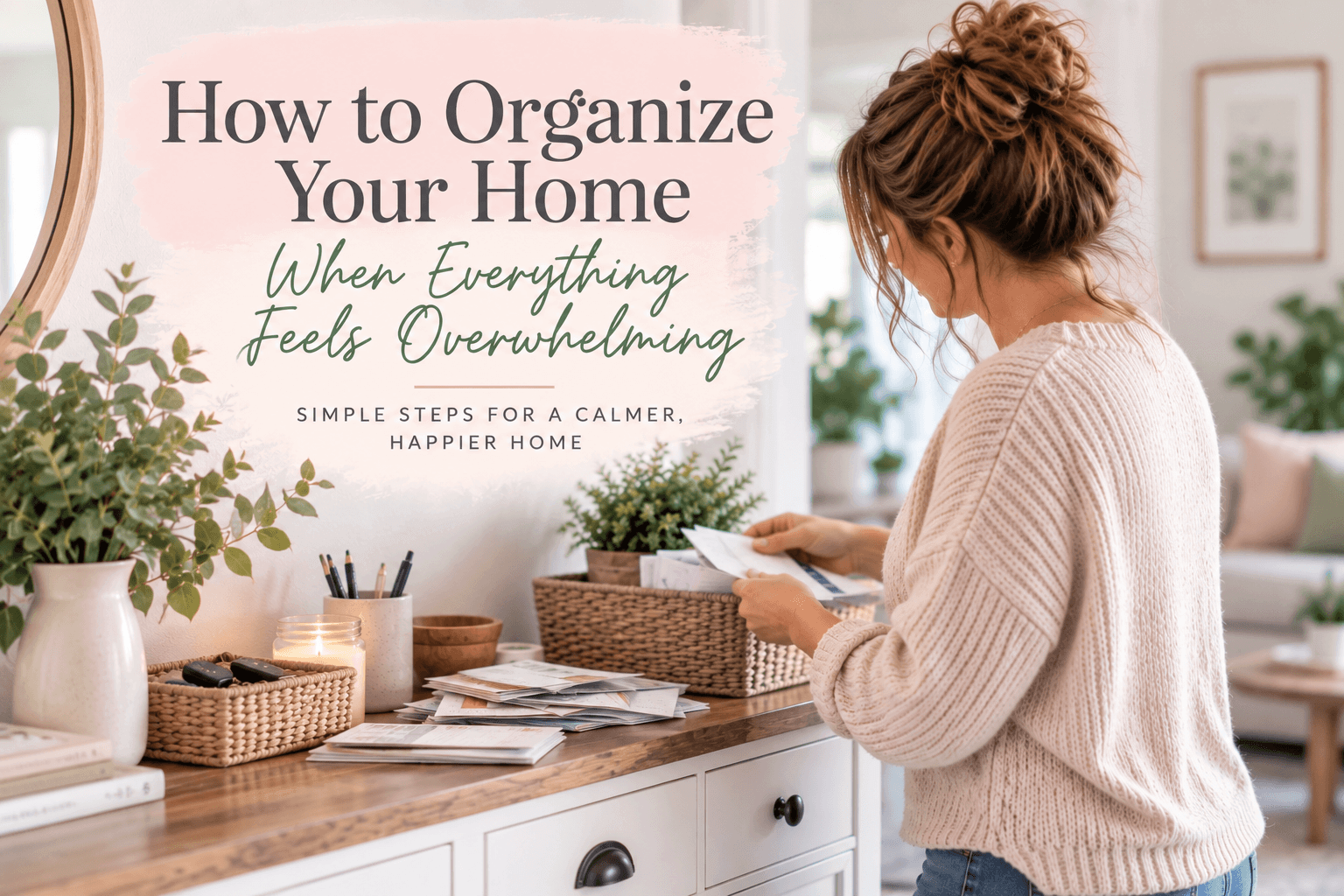
The primary things to stop buying for a more organized home are pre-purchased storage bins, trend-focused organizing systems, and duplicate kitchen gadgets that you do not have an immediate use for. Buying storage containers before decluttering or calculating exact measurements creates unneeded clutter rather than solving existing organizational issues. Shifting your focus toward stopping unnecessary sales, bulk items, and decorative purchases prevents visual noise from entering your home in the first place.
If you’re looking for things to stop buying for a more organized home, you might be surprised by how many organizing products actually contribute to clutter. Another basket, another bin, another organizer—and surely everything will finally have a place. But sometimes buying less is a better solution than finding more ways to store everything.
But sometimes the things we buy to make our homes more organized actually create more clutter.
An organized home isn’t about owning the perfect collection of matching containers. It’s about having enough space for the things you actually use and making those things easy to put away.
Before buying another organizing product, it may help to look at what’s already coming into your home.
Here are 10 things you may want to stop buying—or at least buy less often—for a more organized home.
Storage Bins Before You Know What You’re Storing
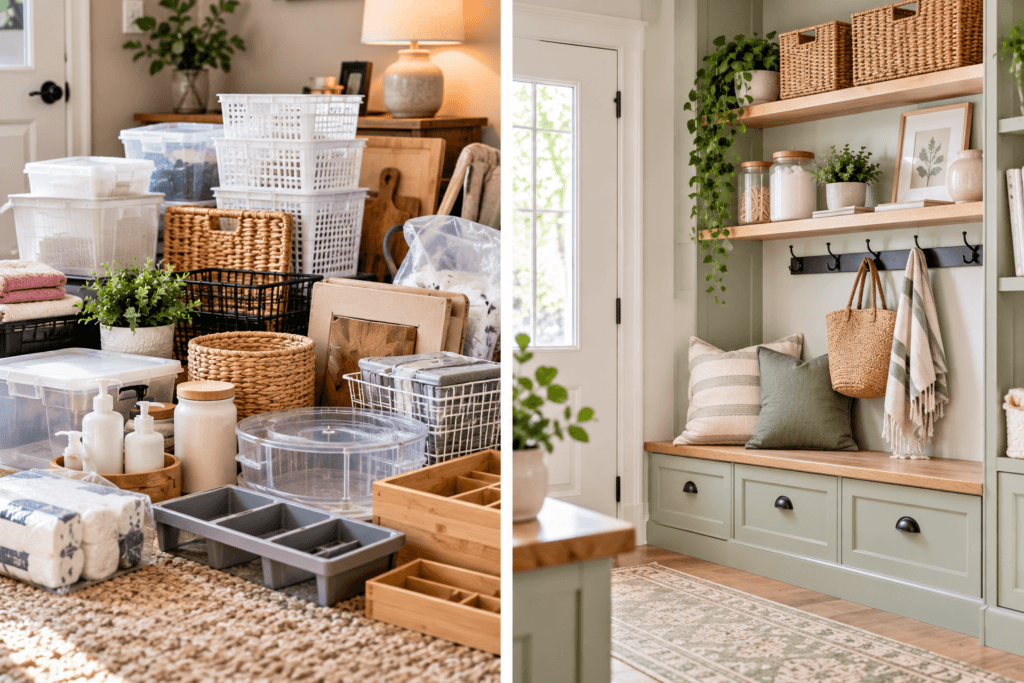
Storage bins can be incredibly useful, but buying them before you know exactly what needs to go inside often creates a new problem.
You end up with empty containers that don’t fit your shelves, bins that are too small for what you intended to store, or stacks of containers waiting for a purpose.
Declutter the area first.
Once you know what you’re keeping, measure the space and decide what type of container would actually make it easier to use.
If you’re struggling to figure out where everything should go, you may already have useful storage spaces around your home that you’re overlooking.
Organizers for Things You Don’t Really Need
Drawer dividers, turntables, shelf risers, baskets, and organizers can make a big difference when they solve a specific problem.
But an organizer doesn’t make unnecessary belongings more useful.
Before buying something to organize a crowded drawer or cabinet, take everything out and ask whether you still need what’s inside.
You may discover that removing a few things solves the problem without buying anything.
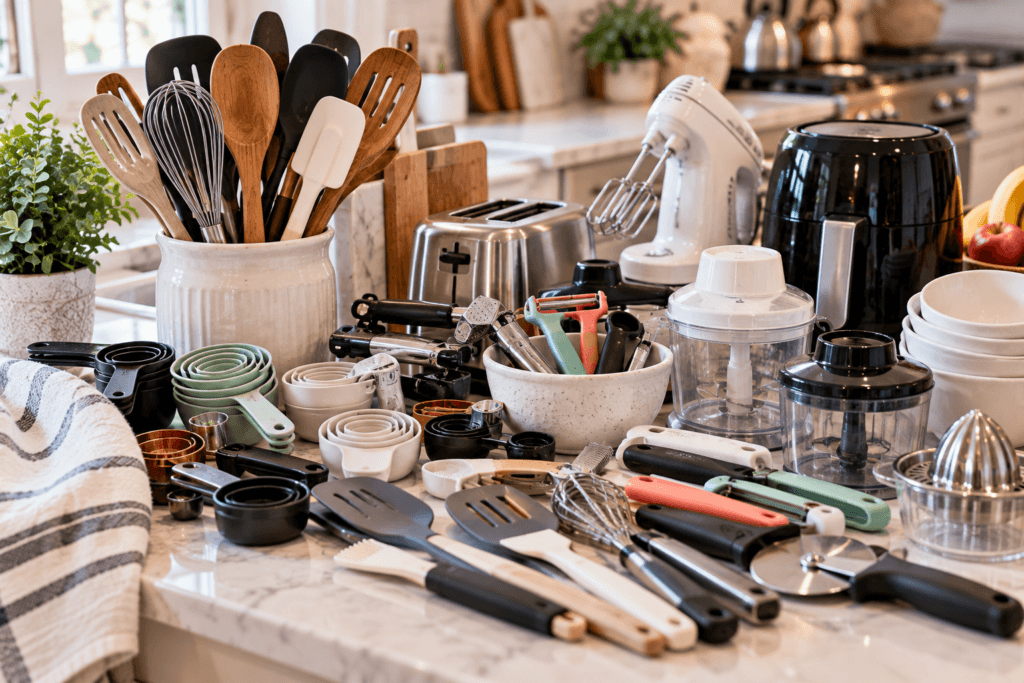
Duplicate Kitchen Gadgets
Kitchen drawers and cabinets can fill up surprisingly quickly with specialty gadgets.
Multiple spatulas, several bottle openers, extra measuring cups, duplicate peelers, single-purpose appliances, and gadgets you rarely use all take up valuable space.
You don’t need to get rid of useful duplicates. If you cook frequently, having several wooden spoons or measuring cups may make perfect sense.
The goal is simply to notice when you’re buying another version of something you already own.
For smaller kitchens especially, being selective about what comes in can be just as helpful as finding better ways to organize the kitchen.
Decorative Baskets Without a Purpose
Baskets are one of the most useful organizing tools around—but they’re also very easy to overbuy.
A pretty basket can seem like an instant solution when you see it in a store.
Then you bring it home and realize you aren’t quite sure where it should go or what should be stored inside it.
Buy baskets to solve an existing storage problem rather than trying to invent a purpose for them afterward.
You’ll save money and avoid creating a collection of empty baskets that need their own storage space.
Bulk Items Just Because They’re Cheaper
Buying in bulk can absolutely save money when you’re purchasing products your household regularly uses.
But a bargain isn’t especially helpful if you don’t have room to store it.
Large packages of paper products, cleaning supplies, toiletries, pantry foods, and household basics can quickly overwhelm closets and cabinets.
Before buying the largest package, think about where it will actually live when you get home.
Sometimes paying slightly more per item is worth it if it prevents your limited storage space from becoming overloaded.
Backup Products When You Already Have Several
Having one backup of something you use regularly can be convenient.
Having six can become clutter.
This happens easily with shampoo, cleaning supplies, candles, makeup, toiletries, pantry items, and household basics.
Before buying another one because it’s on sale, check what you already have.
Keeping similar products together makes this much easier because you can actually see your inventory instead of discovering three unopened bottles months later.
Décor Just Because You Have an Empty Space
Not every empty shelf, wall, tabletop, or corner needs something in it.
Open space can actually help a room feel calmer.
If you find yourself buying decorations simply because an area looks empty, give yourself some time before filling it.
You may decide the room feels better without anything there.
This is especially helpful if your home tends to feel busy even after you’ve cleaned it. Sometimes the problem is visual clutter rather than actual mess.
Organizing Products Because They’re Trending
Social media can make it seem as though every pantry needs matching containers, every refrigerator needs clear bins, and every drawer needs a perfectly fitted organizing system.
Those products can be useful—but only if they work for your home and habits.
You don’t need to transfer cereal into containers if keeping it in the box works perfectly well for your family.
You don’t need matching bins hidden inside a cabinet just because someone else’s cabinet looks beautiful online.
Choose organizing products because they solve a problem, not because they’re popular.
Items for Your “Someday” Life
Sometimes we buy things for the person we imagine we’ll become.
Craft supplies for projects we never start. Kitchen equipment for recipes we don’t make. Workout equipment we don’t use. Supplies for hobbies we’ve lost interest in.
There’s nothing wrong with trying something new.
The problem starts when those unused items remain in our homes for years because we still imagine we might use them someday.
If you already have a collection of these items, don’t buy more until you’ve used what you own or decided whether the hobby still belongs in your life.
If deciding what to keep feels overwhelming, a room-by-room approach to decluttering can make the process much more manageable.
More Stuff Just Because It’s on Sale
A low price doesn’t automatically make something a good purchase.
Clearance aisles, seasonal sales, online deals, and discount stores can make it easy to bring home things we weren’t planning to buy.
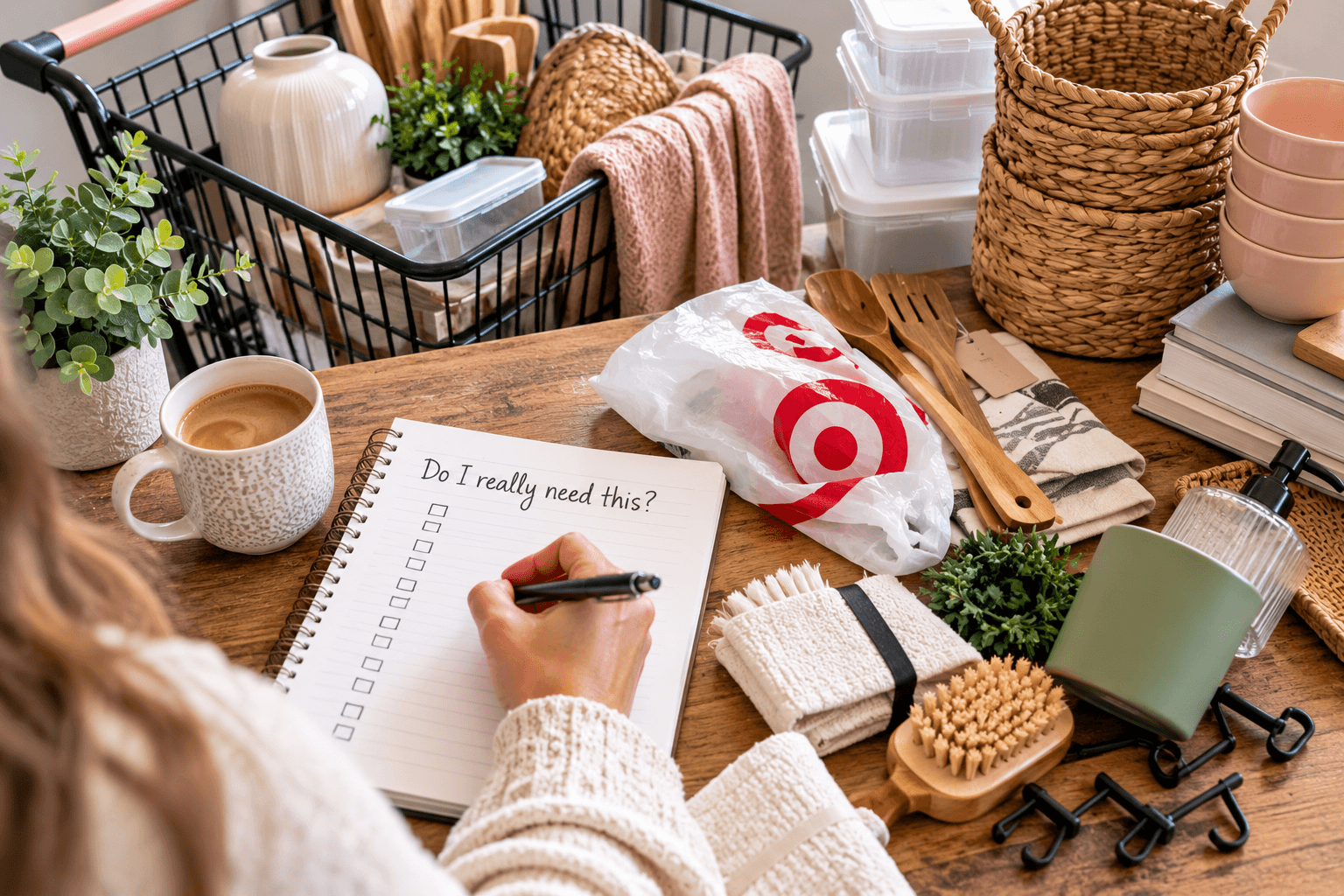
Before putting something in your cart, ask yourself:
Would I still want this if it weren’t on sale?
If the answer is no, the discount probably isn’t saving you money.
You’re still spending money and bringing another item into your home that you’ll eventually have to store, organize, clean, donate, sell, or throw away.
People Frequently Ask
Why do organizing products sometimes cause more clutter?
Organizing products cause clutter when they are purchased before a space is decluttered and measured. This leaves you with empty, mismatched bins that do not fit your shelving or containers holding items you do not actually need or use.
How do I stop buying things I don’t need for my home?
Before purchasing any new household item, ask yourself three rules: Do I already own something that fulfills this purpose? Do I have a designated storage location for this right now? Will this item actively make my daily routines easier?
How can I make my house feel organized without buying anything?
Start by decluttering obvious trash and duplicates, maximizing your vertical spaces (like the backs of doors and inside cabinet walls), and leaving purposeful open areas on flat surfaces to give your eyes a place to rest.
Things to Stop Buying for a More Organized Home: Start Small
One of the easiest ways to make organization simpler is to reduce the number of things that need organizing in the first place. Knowing which things to stop buying for a more organized home can help you save money, reduce clutter, and make everyday organizing easier.
That doesn’t mean you need to stop shopping or become a minimalist.
It simply means being a little more intentional about what earns space in your home.
Before buying another basket, bin, gadget, decoration, or backup product, ask yourself three questions:
Do I already own something that does this?
Do I know exactly where this will go?
Will this make my home easier to use?
If the answer is yes, it may be a worthwhile purchase.
If not, leaving it at the store may be the easiest organizing decision you make all day.
🎁Free Resource: Grab the Simple Home Organizing Checklist
Ready to stop the shopping cycle and get control of the items you already own? Download my free 6-page Simple Home Organizing Checklist to clear the overwhelm at your own pace.
What’s Included Inside:
- Step-by-Step Checklists: Manageable, room-by-room organizational trackers.
- The Weekly Reset Guide: Quick routines to keep visual clutter at bay.
- Actionable Planners: Space to log your household inventories before you shop.